Succession Planting Planner

Turn your frost dates into a succession planting schedule with sowing dates, harvest windows and a timeline chart.

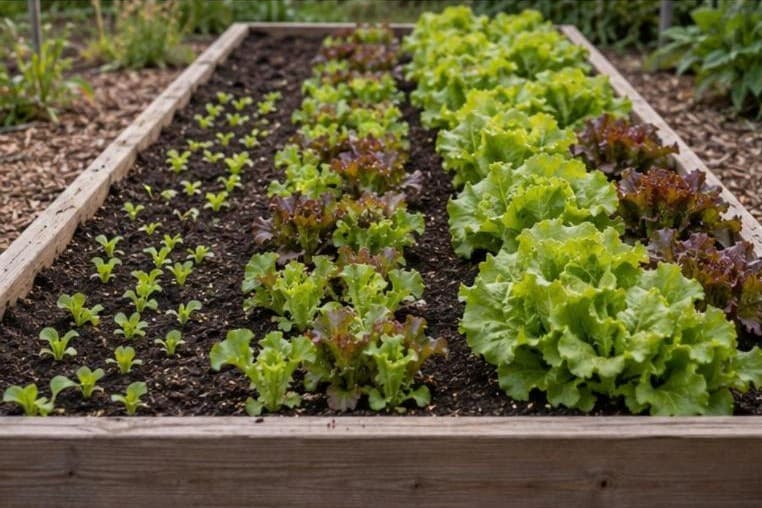
One bed of lettuce at three growth stages, from seedlings to full heads
Units
Frost dates from

Median frost dates of all ZIP codes in the zone.

Frost risk

Half of years still get a frost after the spring date, and half get the first fall frost before the fall date.

Last spring frost Apr 23, first fall frost Oct 22.

ft

How much you sow each time. Short rows often keep the harvest steady without a glut.

Crops

  • LettuceEvery 14 to 21 days
  • RadishEvery 10 days
  • Green BeansEvery 14 to 21 days
  • CarrotEvery 28 days
  • CilantroEvery 14 to 21 days
  • BeetEvery 14 to 21 days

Sowings for 6 crops, Mar 26 to Sep 2

55sowings

Based on Zone 6b, average dates. Each sowing is 5 ft of row.
MarAprMayJunJulAugSepOctNovLettuceRadishGreen BeansCarrotCilantroBeet
SowingExpected harvestLast spring and first fall frost

Exports use the 2027 calendar.

Sowing schedule

Lettuce

Every 14 days · about 8 plants per sowing

SowingSowHarvest
1Apr 2Jun 1
2Apr 16Jun 15
3Apr 30Jun 29
4May 14Jul 13
5May 28Jul 27
6Jun 11Aug 10
7Jun 25Aug 24
8Jul 9Sep 7
9Jul 23Sep 21
10Aug 6Oct 5
11Aug 20Oct 19

Last sowing Aug 23, from 60 days to maturity before the first fall frost. Virginia Tech suggests 3 spring and summer plantings and 3 in fall for head lettuce.

Lettuce seed germinates best at 55 to 65°F and poorly above 80°F, so sow it 2 to 3 weeks before the last frost and again for fall; summer heat turns it bitter.

Change dates and intervalOpen
days

Sources: 14 to 21 days

sowings

Leave empty to fill the season.

Interval: Johnny's Selected Seeds

Radish

Every 10 days · about 69 plants per sowing

SowingSowHarvest
1Mar 26Apr 20 to May 10
2Apr 5Apr 30 to May 20
3Apr 15May 10 to May 30
4Apr 25May 20 to Jun 9
5May 5May 30 to Jun 19
6May 15Jun 9 to Jun 29
7May 25Jun 19 to Jul 9
8Jun 4Jun 29 to Jul 19
9Jun 14Jul 9 to Jul 29
10Jun 24Jul 19 to Aug 8
11Jul 4Jul 29 to Aug 18
12Jul 14Aug 8 to Aug 28
13Jul 24Aug 18 to Sep 7
14Aug 3Aug 28 to Sep 17
15Aug 13Sep 7 to Sep 27
16Aug 23Sep 17 to Oct 7
17Sep 2Sep 27 to Oct 17

Last sowing Sep 7, from 45 days to maturity before the first fall frost. Virginia Tech suggests 2 spring and summer plantings and 4 in fall.

Heat above 80°F makes them bolt, turn hotter and go hollow; they only stay prime for a few days, so pick on time.

Change dates and intervalOpen
days

Sources: 10 days

sowings

Leave empty to fill the season.

Interval: Utah State University Extension

Green Beans

Every 14 days · about 30 plants per sowing

SowingSowHarvest
1Apr 23Jun 12 to Jul 13
2May 7Jun 26 to Jul 27
3May 21Jul 10 to Aug 10
4Jun 4Jul 24 to Aug 24
5Jun 18Aug 7 to Sep 7
6Jul 2Aug 21 to Sep 21
7Jul 16Sep 4 to Oct 5
8Jul 30Sep 18 to Oct 19

Last sowing Aug 2, from 60 days to maturity plus 3 weeks of picking before the first fall frost. Virginia Tech suggests 4 spring and summer plantings and 0 in fall for bush beans.

Change dates and intervalOpen
days

Sources: 14 to 21 days

sowings

Leave empty to fill the season.

Interval: Utah State University Extension, Johnny's Selected Seeds

Carrot

Every 28 days · about 35 plants per sowing

SowingSowHarvest
1Apr 2Jun 11 to Jul 11
2Apr 30Jul 9 to Aug 8
3May 28Aug 6 to Sep 5
4Jun 25Sep 3 to Oct 3

Last sowing Jul 14, from 100 days to maturity before the first fall frost. Virginia Tech suggests 1 spring and summer planting and 2 in fall.

Change dates and intervalOpen
days

Sources: 28 days

sowings

Leave empty to fill the season.

Interval: Utah State University Extension

Cilantro

Every 14 days · about 30 plants per sowing

SowingSowHarvest
1Apr 23When big enough to pick
2May 7When big enough to pick
3May 21When big enough to pick
4Jun 4When big enough to pick

No verified days to maturity, so the planner cannot set a last sowing date. It shows 4 sowings; change the number below.

It bolts quickly in hot weather, so sow a new patch every 2 to 3 weeks and choose slow-bolting varieties for leaves.

Change dates and intervalOpen
days

Sources: 14 to 21 days

sowings

Interval: University of Maryland Extension, UC Master Gardeners of Santa Clara County, UC ANR

Beet

Every 14 days · about 24 plants per sowing

SowingSowHarvest
1Apr 9Jun 8 to Jun 28
2Apr 23Jun 22 to Jul 12
3May 7Jul 6 to Jul 26
4May 21Jul 20 to Aug 9
5Jun 4Aug 3 to Aug 23
6Jun 18Aug 17 to Sep 6
7Jul 2Aug 31 to Sep 20
8Jul 16Sep 14 to Oct 4
9Jul 30Sep 28 to Oct 18
10Aug 13Oct 12 to Nov 1
11Aug 27Oct 26 to Nov 15

Last sowing Aug 27, from the source's last sowing, 8 weeks before the first fall frost. Virginia Tech suggests 2 spring and summer plantings and 2 in fall.

Change dates and intervalOpen
days

Sources: 14 to 21 days

sowings

Leave empty to fill the season.

Interval: Utah State University Extension, Johnny's Selected Seeds

What succession planting is

Succession planting means sowing the same crop several times, a couple of weeks apart, instead of all at once. Virginia Cooperative Extension puts it this way: for certain crops, "you may wish to do multiple plantings spaced every two to three weeks during the planting window to achieve a continuous harvest." A single sowing comes ready all at once; several short rows sown two weeks apart spread the same harvest over months.

Virginia Tech's planting guide (Table 5) recommends two or more plantings a year for lettuce, bush beans, beets, carrots, spinach, radishes, peas, cucumbers, summer squash and sweet corn. The planner covers every crop we have a published sowing interval for.

How the planner builds the schedule

Every date counts from your frost dates. Enter a ZIP code to use the nearest NOAA weather station (1991 to 2020 normals), pick your hardiness zone for the zone's median dates, or type in your own.

Sowing dates = first sowing + interval × 0, 1, 2 ... up to the last sowing date

  • First sowing is the crop's direct-sowing time, counted in weeks from the last spring frost. Frost-hardy crops such as lettuce and radishes take the early end of that window (3 or 4 weeks before the frost). Tender crops such as beans and cucumbers take the late end.
  • Interval is the published gap between sowings for that crop, low end first. You can change it for each crop.
  • Last sowing is the latest date a sowing can still mature before the first fall frost: the frost date minus the slowest days to maturity. For frost-tender beans the planner also subtracts 3 weeks of picking (Utah State gives 2 to 3), so the last planting is not killed half picked. Beets use the published rule instead: stop 8 weeks before the first frost.
  • Harvest window runs from the sowing date plus the fastest days to maturity to the sowing date plus the slowest, plus the picking time where it is published.

If a crop has no verified days to maturity (cilantro is one), the planner cannot set a last sowing date. It shows four sowings and lets you change the number.

"Average" frost dates are the median: half of years still see frost after the spring date. "Safer" is the 30% date that The Old Farmer's Almanac prints, and "safest" is the 10% date. A safer date moves the first sowing later and the last sowing earlier, so the season holds fewer sowings.

Worked example: lettuce in Minneapolis (ZIP 55401)

The nearest station for 55401 is Lower St Anthony Falls, 1.2 miles away. Its average last spring frost is Apr 23 and its average first fall frost is Oct 16.

Lettuce is direct sown 2 to 3 weeks before the last frost, so the first sowing is Apr 2. Johnny's Selected Seeds suggests sowing every 14 to 21 days; the planner starts at 14. Lettuce takes about 60 days from seed, so the last sowing that can mature before Oct 16 goes in on Aug 17.

SowingSowFirst harvest
1Apr 2Jun 1
2Apr 16Jun 15
3Apr 30Jun 29
4May 14Jul 13
5May 28Jul 27
6Jun 11Aug 10
7Jun 25Aug 24
8Jul 9Sep 7
9Jul 23Sep 21
10Aug 6Oct 5

That is ten sowings. At the default 5 ft per sowing and 8 inches between plants, each one is about 8 heads. Switch to "safer" dates (Apr 30 and Oct 10) and the season shrinks to nine sowings, Apr 9 to Jul 30.

The planner also shows the warning the crop notes carry: lettuce germinates poorly above 80°F, and summer heat turns it bitter. Virginia Tech plans three spring and three fall plantings of head lettuce rather than one every two weeks through summer. If your summers are hot, open the crop's settings and move the last sowing date earlier to stop before midsummer.

Succession planting chart: intervals by crop

CropSow everyDays to maturityPlantings (Virginia Tech, spring / fall)Interval source
Basil14 daysnot publishednot listedUtah State
Beet14 to 21 days60 to 802 / 2Utah State, Johnny's
Carrot28 days70 to 1001 / 2Utah State
Cilantro14 to 21 daysnot publishednot listedUniversity of Maryland, UC Master Gardeners
Cucumber14 to 21 days552 to 3 / 0Virginia Tech
Dill14 to 42 days42 to 56not listedUtah State, NC State
Green beans14 to 21 days50 to 604 / 0Utah State, Johnny's
Lettuce14 to 21 days603 / 3Johnny's
Peas14 to 21 days60 to 702 / 0Utah State
Radish10 days25 to 452 / 4Utah State
Spinach7 to 10 days402 / 2Johnny's
Sunflower14 to 21 days85 to 95not listedWest Virginia University, University of Georgia
Sweet corn10 to 14 days60 to 903 to 5 / 0Utah State
Zucchini14 to 21 days503 / 0Johnny's

For cucumbers we found no crop-specific interval, so the planner uses Virginia Tech's general two to three weeks. Virginia Tech also lists two to three spring and summer plantings of cucumbers and none in fall.

How to choose an interval

Short intervals suit fast crops: radishes stay prime for only a few days and go in every 10 days in Utah State's guide, and Johnny's sows spinach every 7 to 10. Carrots, which take 70 to 100 days, go in every 28 days in Utah State's guide. For a crop with a range, use the short end if you eat it steadily and want small, frequent harvests, and the long end if a gap of a week between harvests does not matter.

Row length sets the size of each harvest. Start with a short row per sowing and add more later, instead of one long row that all comes ready together.

Exports and next steps

Download the schedule as a spreadsheet (CSV) or as a calendar file (ICS) with one reminder per sowing, or print it with the chart. Exports use next season's calendar once this year's sowing season is past.

To decide how much row each crop needs in total, use the garden size calculator. For crops you start indoors before the first sowing, the seed starting calculator counts back from the same frost dates. To fit the rows into beds, open the raised bed planner.